
Distance: Approximately 1 km
Time: 30–45 minutes
Starting Point: Coronation Park
Looking for things to do in Grimsby? One of the best ways to experience the town is on foot. This self-guided historic walking tour explores downtown Grimsby through the buildings, businesses, and stories that helped shape the community.
Beginning at Coronation Park and ending at the former Grimsby Fire Hall, the route highlights more than 200 years of local history. Along the way, you'll discover former department stores, meat markets, post offices, and community institutions, many of which continue to serve residents and visitors today through the businesses that now occupy them.
The Route at a Glance
This walk begins at Coronation Park before moving east along Main Street West and ending at the former Grimsby Fire Hall.
Coronation Park
55 Main Street West
52 Main Street West (The Dutch Shop)
31–35 Main Street West (Grimsby Home Hardware)
27 Main Street West (CIBC)
26 Main Street West (Grimsby Sub Shop)
9 Main Street West (Village Studio)
7 Main Street West (Main West Men's Wear)
2 Main Street East (Canada Post)
15 Main Street East (The Brick Shack)
Coronation Park
Before downtown Grimsby became a destination for shopping and dining, the area around Forty Mile Creek was an industrial hub. According to the Coronation Park historical plaque, the creek powered a variety of local businesses, including canning factories, basket factories, and mills throughout the 19th and early 20th centuries.
Today, the park is a community gathering place, but its history reflects Grimsby's roots as a centre of manufacturing and agriculture. As you cross the nearby bridge, you'll also pass a 1922 marker commemorating a piece of infrastructure that has connected residents to downtown for more than a century.
55 Main Street West
Today: Professional offices
This building has worn many hats over the years. In 1919 it housed the law offices of Calder and Hazelwood before becoming home to Grimsby Fuel and Feed, operated by William McPherson, from the 1930s until 1967.
For roughly a decade afterward, the Salvation Army operated a benevolent store from the location. The building later returned to its legal roots, first as Sinclair, Murakami & Loney and later as the office of Donald C. Loney, Barrister and Solicitor.
52 Main Street West
Today:The Dutch Shop
Food has been the defining theme of this building for more than a century. Originally home to the Wellington Walker Meat Market in the late 1800s, the property was later purchased by Bert and Grace Smith.
In 1928, the couple opened Ma Smith's Home Lunch, where diners could enjoy a full-course meal for fifty cents. After experimenting with a hobby shop in the 1960s, the building was redeveloped and eventually became home to The Dutch Shop, continuing a long tradition of serving food and specialty products in downtown Grimsby.
31–35 Main Street West
Today: Grimsby Home Hardware
Known historically as the Temple Building, this structure was built in 1919 by James Wray. The second floor housed Union Lodge No. 7, while the ground floor was divided into commercial storefronts.
Over the decades, the building hosted a restaurant, bowling alley, furniture store, dry goods store, and hardware business. Hardware retailing ultimately became its defining use, and the property continues that tradition today as Grimsby Home Hardware.
27 Main Street West
Today: CIBC
This site was originally occupied by E.J. Palmer's Department Store, which opened in 1875 and became one of downtown's best-known retail businesses.
Later known as the Hawke Building, the store sold everything from jewellery and carpets to hardware and household goods. Stedman's eventually took over the location before the building was demolished in 1977 to make way for the current CIBC branch.
26 Main Street West
Today: FAI Mama’s Kitchen
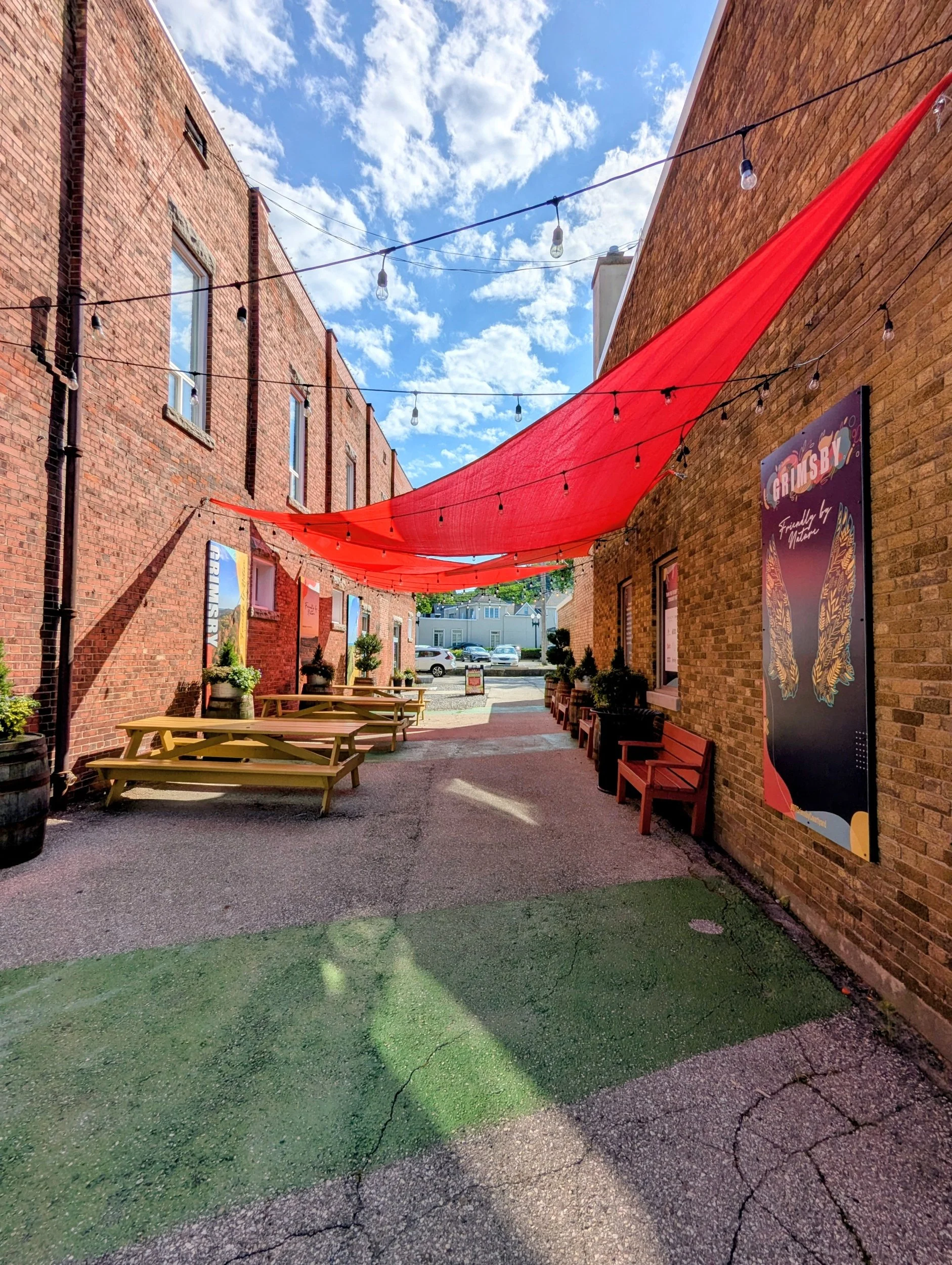
One of the oldest commercial sites in downtown Grimsby, this property traces its roots back to an 1836 warehouse operated by Henry Griffen.
The building later became the Mabey Meat Market and, in 1936, the Quality Meat Market. After serving as Casey's Produce, the property entered a new chapter when the Kouretsos family opened the Grimsby Sub Shop in 1983. Locals still affectionately refer to it as "Mama's,” now FAI Mama’s Kitchen.
9 Main Street West
Today: Village Studio
This address has a long connection to the shoe business. During the 1930s it housed an A&P store before Andrew Smith converted it into a shoe store in 1938.
The building remained connected to the footwear business through several owners, including Maher Shoes and Larson's Shoes, before entering a new chapter as Village Studio in 1993.
7 Main Street West
Today: Main West Men's Wear
Few businesses in downtown Grimsby can claim the continuity found at this address. Men's clothing has been sold here continuously since 1935, beginning with Robert C. Bourne's men's furnishing store.
The property also housed Smith's Shoe Store and the Mary-Lyn Shop before expanding into the menswear business that remains today. Main West Men's Wear continues a retail tradition that has lasted for nearly a century.
2 Main Street East
Today: Canada Post
The history of postal service in Grimsby dates back to 1816, when the community was still known as The Forty.
The first post office operated from the home of postmaster Captain William Crooks. A frame post office was later built on this site in 1867, followed by a brick building with a clock tower in 1914. The current building officially opened in 1960, continuing more than two centuries of postal service in Grimsby.
15 Main Street East
Today: The Brick Shack
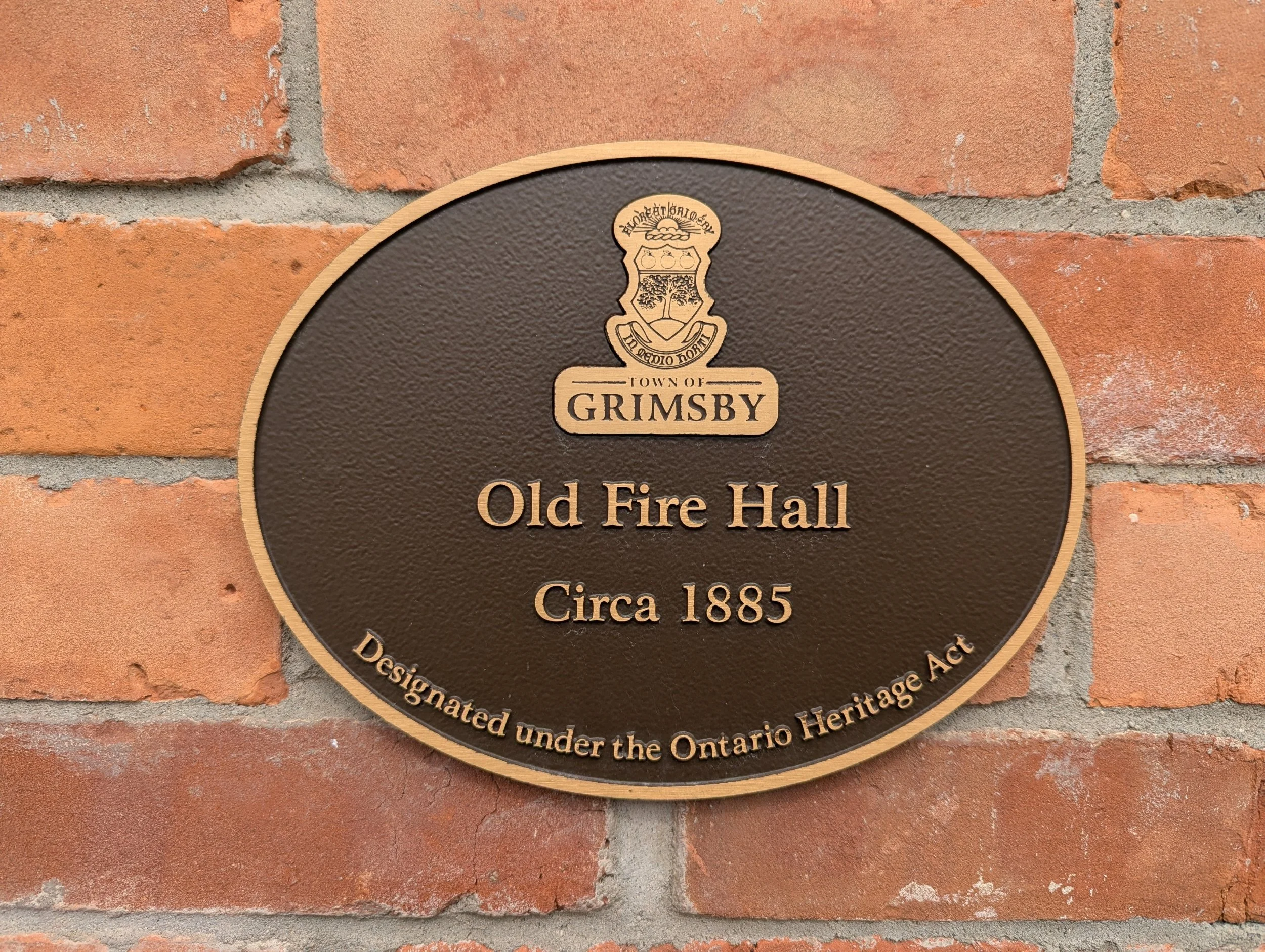
Built in 1890, this building originally served as Grimsby's fire hall, complete with a tower used for drying fire hoses.
It was a true community building, also housing a library operated by the Mechanics' Institute and providing space for the town band. After a new fire hall was constructed across the street, the building became home to the Grimsby Police Department and later the Niagara Regional Police. Today, visitors know it as The Brick Shack, one of downtown's most distinctive specialty retailers.
A Downtown Shaped by Generations
Whether you're visiting Grimsby for the first time or rediscovering the town as a local, this short walk offers a different perspective on downtown.
What makes Grimsby's historic core unique is not simply the age of its buildings, but the continuity they represent. Many of the businesses operating today occupy sites that have served residents for generations, creating a visible connection between the town's past and present.
From former meat markets and department stores to the old post office and fire hall, each stop reveals another chapter in Grimsby's story. Together, they help explain how a small lakeside community grew into the vibrant downtown visitors enjoy today.
